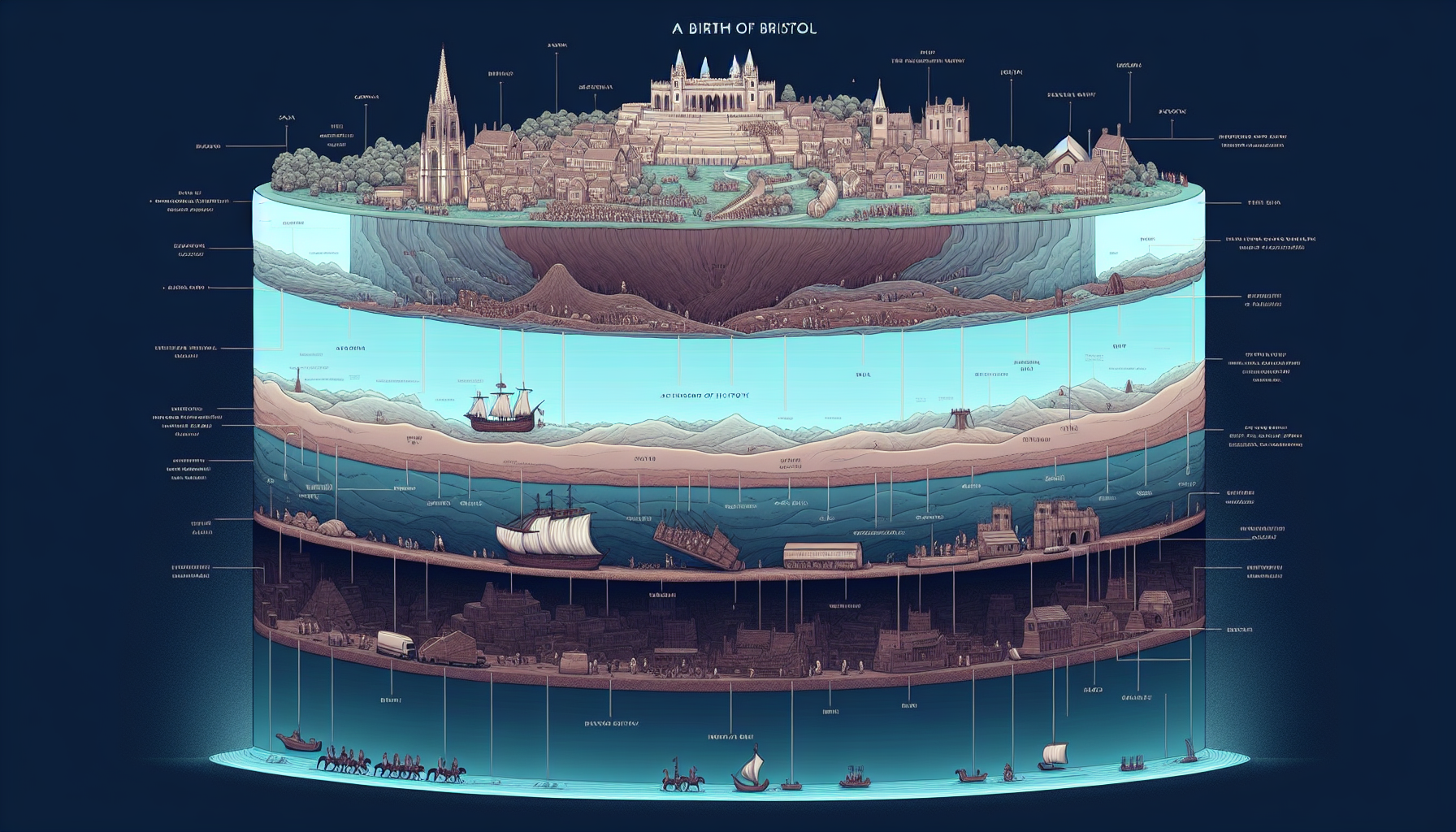
Bristol’s beginnings stretch back over a thousand years to a time when Saxons carved out settlements along England’s rivers and hills. It’s hard to picture now. Considering the city is an energetic hub of culture, business, and history. But its earliest days were defined by simple wooden buildings, trade routes, and a strategic location that made it an essential point of connection long before grand bridges or bustling harbors took shape.
The Saxon Roots of Bristol
The story starts in the early medieval period. During the 10th century, Anglo-Saxons established a small but growing settlement at a crossing point on the River Avon, a place they called Brycgstow, meaning “the place at the bridge.” That name stuck, evolving over centuries into what we now know as Bristol.
Life in Saxon Bristol was centered around trade. Positioned between the rivers Avon and Frome, the area became a hotspot for merchants and craftsmen. The river was a lifeline, allowing goods to flow in and out while settlers built bustling markets around it. Local pottery, cloth, and agricultural products found eager buyers, setting the stage for Bristol’s rise as a commercial powerhouse.
Trade and Growth in the Medieval Era
By the 11th century, Bristol had grown beyond a small Saxon outpost. The Domesday Book of 1086 recorded its importance, highlighting its strong economy and fortified status. Traders from across England. And even further afield. Came seeking goods, wealth, and opportunity.
This period also saw the rise of Bristol’s maritime connections. Merchants began to explore beyond local rivers, sailing the Severn Estuary and reaching as far as Ireland. This wasn’t just about trade; it was about how connectivity shaped communities, bringing in ideas, skills, and cultural influences that would shape the city for centuries.
The Norman Influence and Bristol Castle
When the Normans arrived post-1066, they saw Bristol’s potential and wasted no time in reinforcing their hold on it. They built Bristol Castle, a formidable stone fortress, to exert control over the resource-rich region. This wasn’t just a military decision. Castles in medieval England also symbolized authority and stability. The structure stood tall for hundreds of years, playing a role in some of England’s most significant historical moments, including skirmishes during the English Civil War.
It’s interesting to think how different the cityscape would look today if the castle had survived. Instead, it was demolished in the 17th century, and Castle Park now stands in its place, offering a quiet reminder of Bristol’s war-torn but resilient past.
The Legacy of Bristol’s Early Years
The foundations laid during the Saxon and medieval periods set Bristol on a trajectory toward becoming one of England’s most influential cities. Its strategic location, established trade routes, and ability to evolve with the times meant that by the time the Tudor period rolled around, it was already a major player in both national and international affairs.
Walking through Bristol today, you can still glimpse echoes of its early roots. Street names, medieval churches, and even remnants of the old city walls hint at the city’s long and storied history. Though modern Bristol thrives with innovation, culture, and a dynamic population, its essence is still deeply connected to those Saxon settlers who first recognized its potential.
Frequently Asked Questions
How did Bristol get its name?
Bristol’s name originates from the Old English term Brycgstow, meaning “the place at the bridge.” Over time, the pronunciation and spelling evolved into the modern name we use today.
Was Bristol an important city during the Saxon period?
Yes, by the late Saxon period, Bristol had become a crucial trade and economic center thanks to its strategic location along the River Avon. It became even more significant after the Norman Conquest.
What happened to Bristol Castle?
Bristol Castle was demolished in the 17th century following the English Civil War. The space it once occupied is now Castle Park, where some ruins still remain as historical markers.
Why was Bristol’s location so important in its early history?
Bristol’s position along the River Avon and near the Severn Estuary made it an ideal trading hub. River access allowed goods and people to move efficiently, fostering economic and cultural growth.
Are there any Saxon-era buildings still standing in Bristol?
Most Saxon-era structures have been lost over time, but elements of Bristol’s medieval history remain, including churches like St. Mary Redcliffe, though much of what stands today was built after the Saxon period.