From Saxon Settlement to Maritime Giant: The Evolving History of Bristol
Bristol is a city steeped in history, its story stretching from a modest Saxon crossing point on the River Avon to a bustling maritime hub that played a key role in global trade and exploration. This transformation was shaped through centuries of development, innovation, and resilience, with each era adding its own unique layer to the city’s identity.
Origins: The Saxon Village of Brigg Stow
The roots of Bristol trace back to the early medieval period when it was known as Brigg Stow. Meaning “the meeting place at the bridge” in the Saxon tongue. This name hints at the significance of its location, where a wooden bridge crossed the River Avon, offering a natural crossing and gathering point. As a Saxon settlement, it was modest but pivotal, providing a foundation for trade and communication in the region.
Norman Era and Medieval Trade Expansion
Following the Norman conquest, Bristol’s strategic position was further developed. The establishment of markets and fairs, along with granting of charters, set the stage for growth. The medieval period saw Bristol flourish as a trading town. It became a major hub for commerce, particularly known for the export of English wool. Its river and port facilities were critical assets, cleverly utilized to connect with continental Europe.
Bristol’s merchant class grew in prominence, and the city’s economy thrived. This period laid the groundwork for the city’s later ventures into more ambitious maritime exploits.
Bristol and Atlantic Exploration
By the late 15th century, Bristol had emerged as a powerhouse of maritime ambition. It was famously the home and starting point for John Cabot’s 1497 voyage, one of the earliest English expeditions to the Americas. Cabot’s journey did not only mark Bristol’s place on the globe as a gateway to new worlds but symbolized the burgeoning spirit of exploration and commerce that the city embraced.
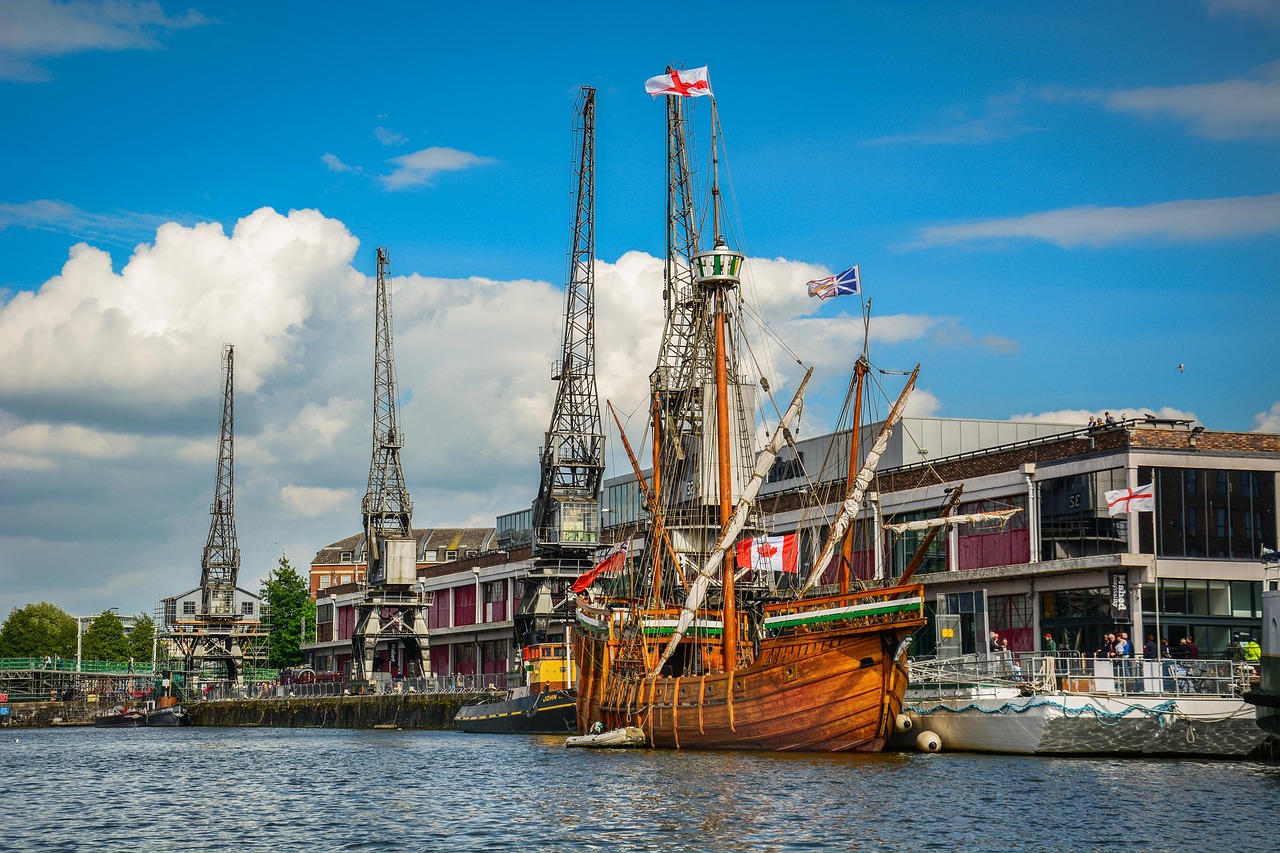
This era saw Bristol sailors and merchants pushing the boundaries of known geographies, initiating voyages that sought new trading routes and opportunities across the Atlantic. The ship Matthew, central to Bristol’s maritime story, became synonymous with these daring ventures, underscoring the city’s role as a springboard for exploration.
The Industrial Age and the Growth of Dockyards
The dawn of the Industrial Revolution brought significant transformation to Bristol with the expansion of its dockyards and maritime infrastructure. The city’s shipbuilding industry gained strength, and the docks were extended to accommodate larger vessels and increased cargo traffic. This boom supported Bristol’s position as a key port in the British Empire, handling trade that included goods as varied as tobacco, sugar, and cotton.
Industrial advances also triggered urban growth and broader economic diversification, with Bristol becoming not only a maritime center but also a hub for manufacturing and commerce.
Preserving the Legacy: Historic Sites That Tell Bristol’s Story
Walking through Bristol today, vestiges of its long history are beautifully preserved, inviting visitors and residents alike to connect with its past.
Castle Park, where the remains of St Peter’s Church stand, offers a glimpse into early medieval Bristol, possibly dating back to the 8th century. This site echoes the city’s Saxon roots and religious heritage.
The quaysides and dock areas, including places like Wapping Wharf, hold centuries of maritime activity in their architecture. Once lined with cargo sheds that bustled with trade, these locations are now cultural landmarks reflecting Bristol’s evolution as a port and industrial hub.
Bristol’s Heritage Harbour initiative champions the preservation of buildings, shipyards, and quays that narrate the city’s role in maritime commerce, ensuring these treasures remain integral to the cityscape.
Historic museums and galleries also celebrate Bristol’s story through exhibits on exploration, trade, and local craftsmanship, connecting the dots from its modest beginnings to the vibrant city it is today.
A Journey Through Time: Reflecting on Bristol’s Evolution
Tracing Bristol’s path from a Saxon crossing to a maritime giant reveals a city marked by purposeful growth and enduring resilience. From the humble beginnings as Brigg Stow, a pivotal trading spot by a wooden bridge, it grew through Norman influences and medieval commerce to become a center of Atlantic exploration.
The spirit of discovery embodied by John Cabot’s voyages from Bristol resonates through the centuries, inspiring trade, industry, and cultural richness. The industrial expansion of dockyards underscored Bristol’s strategic importance in global maritime affairs and fueled urban and economic growth.
Historic preservation efforts ensure that these chapters live on, offering tangible links to the past amid a modern cityscape. Sites like Castle Park, Wapping Wharf, and the Heritage Harbour serve as enduring reminders of Bristol’s dynamic history.
Whether you are a history enthusiast or simply curious about this remarkable city, Bristol’s story invites you to explore deeper, to appreciate the blend of tradition and innovation that defines it.
Ready to discover Bristol for yourself? Step beyond the familiar and immerse yourself in the city where every corner tells a story spanning over a millennium.
Frequently Asked Questions
What does the name Bristol mean?
The name Bristol derives from the old Saxon term “Brigg Stow,” which means “the meeting place at the bridge,” referring to the wooden bridge crossing the River Avon where the early settlement formed.
How did Bristol contribute to Atlantic exploration?
Bristol was the home port for John Cabot’s 1497 voyage to North America, marking it as a significant point of departure for early English Atlantic exploration and trading expeditions.
What are some historic sites in Bristol related to its maritime history?
Castle Park, Wapping Wharf, and the Heritage Harbour preserve many of Bristol’s historic maritime buildings and dockyards, showcasing the city’s rich trading and shipbuilding heritage.
How did Bristol’s dockyards develop during the Industrial Age?
The Industrial Revolution expanded Bristol’s dockyards to accommodate larger vessels and increased trade, strengthening its position as a key maritime and industrial port.
Can visitors explore Bristol’s history through museums?
Yes, Bristol’s museums and galleries offer exhibits focusing on its Saxon origins, maritime trade, exploration, and local craftsmanship, providing a comprehensive insight into the city’s past.