Back in 1831, Bristol wasn’t exactly a city of peace and quiet. It sat at a boiling point. Parliamentary reform was the burning issue of the time, and tempers were flaring across the country. People were sick of being shut out of the process. Rotten boroughs. Tiny districts with barely any voters. Still sent MPs to Parliament, while industrial cities like Bristol, full of new energy and economic might, had next to no political clout. It felt like the system was rigged, and let’s be honest. It was.
That powder keg finally exploded in October 1831.
So, what sparked the Bristol Riots?
Like many good stories, it starts with a controversial character entering the scene.
Sir Charles Wetherell, a hardline judge and outspoken critic of reform, rolled into Bristol on October 29. As Recorder (essentially the chief legal officer of the city), he was expected to preside over the Quarter Sessions. But to reform supporters, Wetherell wasn’t just a judge. He was the walking, talking embodiment of everything wrong with the system.
Crowds gathered. Tempers rose. Then, it got out of hand.
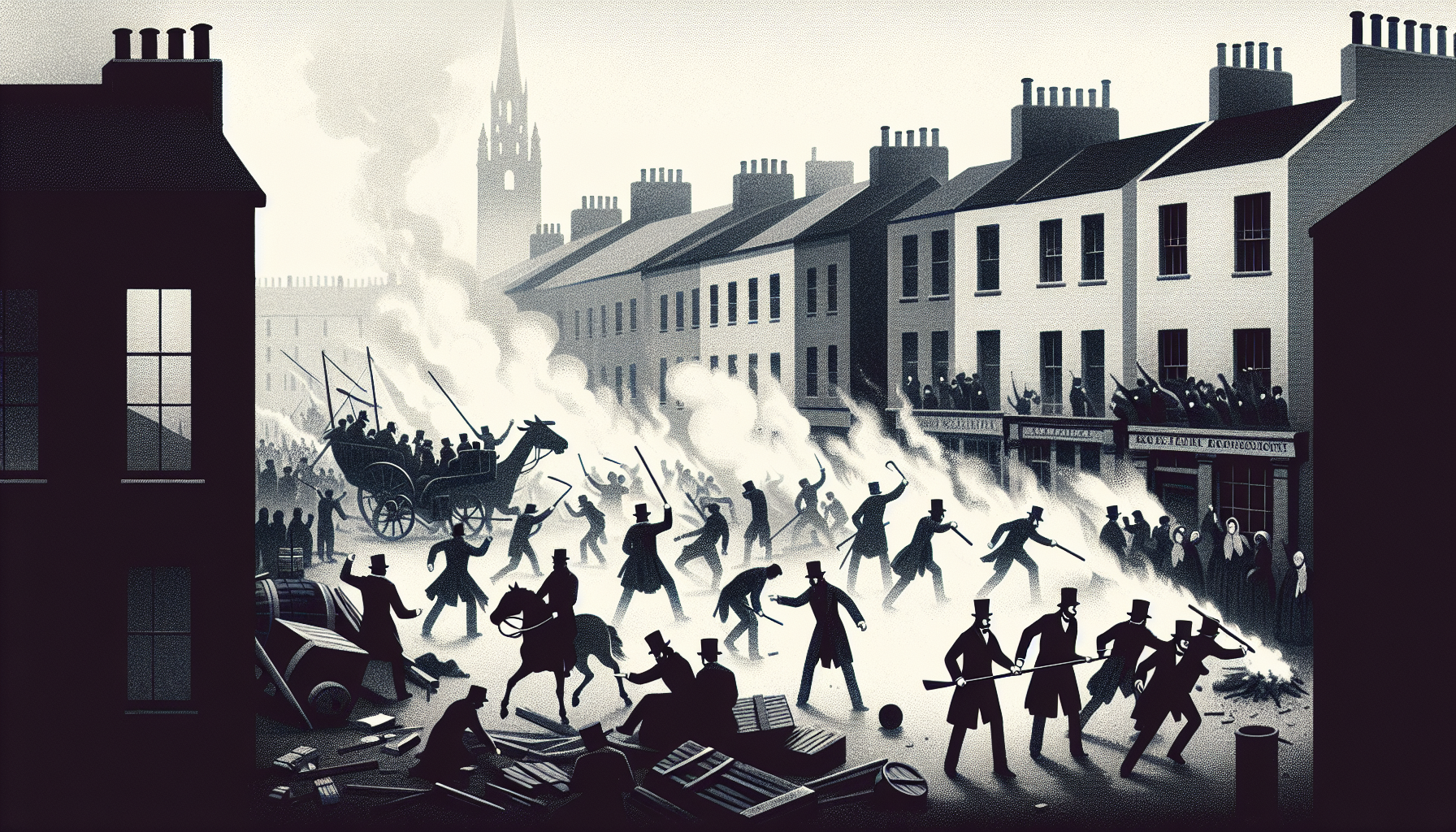
Wetherell was met with a barrage of boos and jeers. Within hours, that unrest turned into full-scale rioting. Protestors set fire to buildings, smashed prison gates, and looted homes. Especially those of the city’s elite. Over just three days, chaos ruled the streets. The Mansion House, Custom House, and Bishop’s Palace were all torched. It’s estimated that some £300,000 worth of property (that’s over £35 million today) went up in flames.
At one point, I remember visiting Bristol and walking through Queen Square. What’s now a picturesque area surrounded by Georgian townhouses. But knowing what happened there in 1831, it’s impossible not to feel the chill of history beneath the cobblestones.
Who actually took part?
Initially, the disturbances seemed like a protest populated by disaffected citizens. Working-class folks fed up with being voiceless. But as the hours ticked on, control slipped away.
Reports from the time (notably from The Times archives and parliamentary inquiries) suggest that the line between political protest and opportunistic lawlessness blurred quickly. Local gangs joined the fray, and widespread drunkenness fueled the flames. Soldiers tasked with restoring order were either hesitant or harsh. Some say they were even complicit in allowing things to unravel.
Eventually, Lieutenant-Colonel Thomas Brereton, reluctant to open fire on citizens, faced charges of dereliction of duty. He took his own life before his trial concluded. A grim reminder of just how deep the chaos ran.
Why did things spiral the way they did?
Here’s what research points to: built-up frustration, unchecked inequality, and a government dragging its feet on reform.
The 1831 Reform Bill, introduced by Prime Minister Charles Grey, had already passed in the House of Commons. But when the Lords threw it out? That’s when all hell broke loose, not just in Bristol, but in towns and cities across England. Rioting wasn’t limited to the West Country. But Bristol’s was among the most violent and destructive.
The social contract had frayed. Reform supporters saw the bill as their chance to finally break the stranglehold of the elites. When it failed, it felt like betrayal.
And betrayal can be a mighty motivator.
What came next?
After the flames were doused and the dust settled, the repercussions hit hard.
- Over 100 people were arrested
- 31 individuals were tried
- 4 were executed by hanging
Let that sink in: four men were hanged for their role in the riots, making a blunt example of them. Property damage was so enormous that it took years. Literally. To recover what was lost.
But here’s the thing. Change did come.
Just a year later, in 1832, the Great Reform Act was passed. It wasn’t perfect, but it scrapped many rotten boroughs, redistributed seats, and finally gave cities like Bristol more representation in Parliament. About 1 in 6 men could now vote. It was a start.
Was it the riots that forced Parliament’s hand? That can’t be said definitively. But historians like Dr. Martin Daunton (former Professor of Economic History at Cambridge) suggest that the unrest showed the government how desperate and volatile things had become. Reform was no longer a debate. It was an urgent need.
Why does this still matter?
It’s tempting to chalk this up as just another footnote in British history.
But here’s the thing. These kinds of uprisings leave lasting fingerprints. They reveal the consequences of ignoring rising inequality, of maintaining systems long past their expiration dates. More than anything, they highlight what can happen when people feel they’ve run out of peaceful options.
Today, we’re still confronting thorny questions about representation, power, and who gets a say. Every time someone shrugs off political engagement or dismisses reform as “too complicated,” it’s worth remembering what it once took just to get a basic voice in the system.
Politics isn’t some abstract game. For many, it’s life and death.
And when society feels unheard? History has a nasty habit of repeating itself.
So here’s the takeaway: the Bristol Riots weren’t just about fire and fury. They were about refusing to sit quietly while the system ignored them. That’s a lesson still worth holding close.
Frequently Asked Questions
Were the Bristol Riots of 1831 a spontaneous event or pre-planned?
The riots weren’t pre-planned in the traditional sense. Tensions had been boiling for weeks due to the shelving of the Reform Bill, but the arrival of Sir Charles Wetherell acted as a spark. Real-time newspaper coverage and eyewitness accounts from the time describe the outburst as rapid and emotionally charged, rather than strategically orchestrated.
How did the government respond after the riots?
In the immediate aftermath, the government increased police presence and launched strict legal proceedings against the rioters. Soldiers were eventually ordered to restore order forcibly. Longer term, the government fast-tracked the Reform Act of 1832 in response to public pressure and unrest.
What lasting legal or policing reforms came from the riots?
One of the long-term outcomes was a push toward more formal policing in urban areas. While the Metropolitan Police had already been established in 1829, events like the Bristol Riots highlighted the need for well-organized law enforcement across other cities. Bristol itself began to professionalize its policing in the years that followed.
How many people died during the Bristol Riots?
The exact number varies depending on the source, but most accounts estimate that around 100 to 130 people died. As a direct result of shootings, building collapses, or fires during the riots. The fatalities included both rioters and civilians trapped during the chaos.
Is there a memorial or place in Bristol that commemorates the riots?
There isn’t a single dedicated memorial to the 1831 riots, but locations like Queen Square still bear the historical scars and are sometimes marked with plaques. Some walking tours in Bristol now include stops that tell the story of the events of 1831 in powerful, visual ways.
Let’s keep asking the hard questions. And learning from the past. These events may be nearly two centuries old, but their echoes still ring through our institutions, our cities, and our politics today.