Few landmarks in the UK capture a city’s spirit quite like the Clifton Suspension Bridge does for Bristol. Ask someone from the city about it, and there’s a good chance their eyes will light up a little. It’s not just a bridge. It’s history suspended in mid-air, a feat of engineering that continues to stir up pride nearly two centuries after the first stone was laid.
A Dream of Epic Proportions (and a Dash of Rivalry)
Way back in the 1820s, long before social media and smartphones dictated how we connect, the people of Bristol were already thinking about connectivity. Quite literally. They needed a way to get from Clifton to Leigh Woods without making the long detour down and around the Avon Gorge. The gorge, by the way, isn’t your average ditch; it’s 75 metres deep and carved out like nature’s personal grand statement.
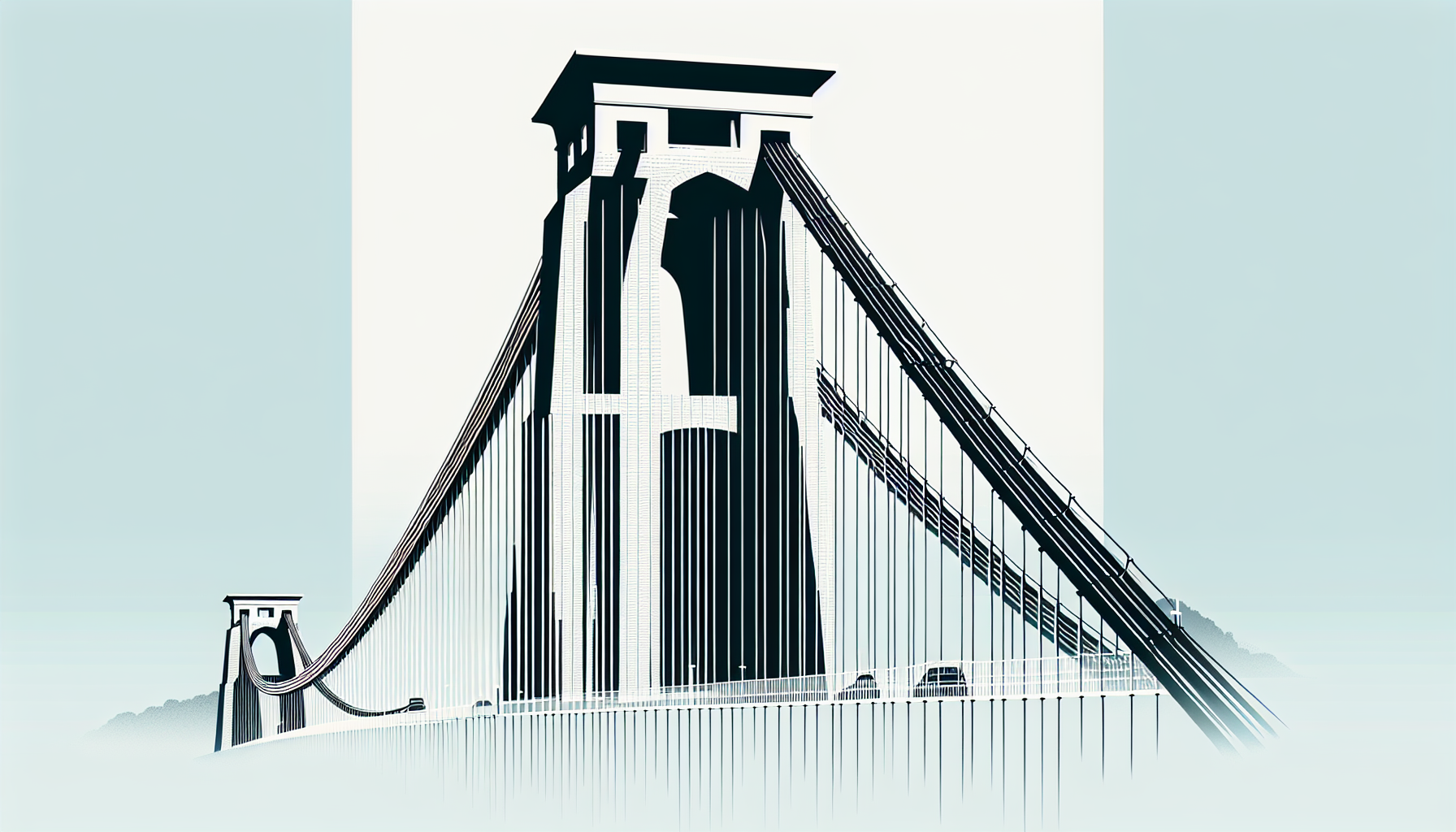
This grand idea sparked a design competition in 1829. Among the entries was a 24-year-old Isambard Kingdom Brunel. Yes, that Brunel. He wasn’t the favorite right away. Scotsman William Barlow initially got the nod. But Brunel wasn’t one to back down. He persevered, pitched, redesigned, and ultimately convinced the committee (after a few dramatic turns and setbacks) to give him the project. His pitch? A suspension bridge with Egyptian-style towers. Bold, unique, and befitting the scale of the Avon Gorge.
Let’s pause there for a sec. Brunel was 24. Twenty-four! At that age, I was still figuring out which career path to take, let alone designing massive infrastructure that would define a city for centuries.
A Bridge Born from Setbacks
Construction began in 1831… and then stopped. Political unrest (including the Bristol Riots) brought everything to a grinding halt. It would be over two decades before proper work restarted. This time with engineers William Henry Barlow and John Hawkshaw (yes, the same Barlow whose earlier design had been picked over Brunel’s). Brunel didn’t live to see the bridge completed; he passed away in 1859. As a tribute, his contemporaries decided to revive his original vision and complete it using parts from another of his works. Namely, the unused chains from Brunel’s Hungerford Bridge in London.
That’s right: the Clifton Suspension Bridge is part recycled masterpiece.
When the bridge finally opened in 1864, it didn’t just span a river. It spanned dreams deferred, legacy reclaimed, and the endurance of one man’s vision. Even today, standing on the bridge, you can sense the weight of its story in the iron beneath your feet.
More Than Just a Pretty Crossing
Here’s the thing: most people see the Clifton Suspension Bridge as beautiful. And it is. Its silhouette against the Bristol sky is postcard-perfect. Whether you’re catching the pinks of a summer sunset or the moody greys of a rainy March morning, the bridge always holds its own.
But it’s not just about aesthetics. Structurally, it was groundbreaking. With a main span of 702 feet (214 metres), it was the longest suspension bridge in the world when it opened. That’s no small boast. It carried horse-drawn carts then, and today it handles thousands of vehicles a day. No mean feat for a bridge that’s 161 years old.
I’ve walked across it in windstorms, cycled over it with adrenaline pumping, and once saw a newlywed couple posing for photos in the fog. Every time, no matter the season or the mood, it feels like stepping into a living slice of history.
A Place of Moments and Memories
Ask Bristolians what the bridge means to them and you’ll get a whole range of answers.
“It’s where I go to clear my head after a long week,”
one local told me while watching the hot air balloons drift past.“My dad proposed to my mum right there in ’86,”
another shared, pointing to the centre where the views are most breathtaking.
During the annual Bristol International Balloon Fiesta, dozens of colourful orbs drift past the towers, like little dots dancing through the sky. If you’ve never seen it, you’re missing out on one of the most magical scenes in the UK. And every year, no matter how many balloons rise, the suspension bridge stands still. Like a proud parent watching over the show.
Keeping the Legacy Alive
Today, the Clifton Suspension Bridge is maintained by the Clifton Suspension Bridge Trust. This isn’t a modern toll network or part of the city budget. It’s operated independently. The 50p toll for cars goes straight back into maintaining the structure, ensuring Brunel’s creation doesn’t just survive but thrives.
There’s also a dedicated Visitor Centre on the Leigh Woods side. It’s small, free, and packed with brilliant visual displays explaining the engineering, the history, and the mythos surrounding the bridge. As someone who’s written about British engineering landmarks for nearly a decade, it’s honestly one of the more thoughtfully designed visitor spaces I’ve seen. And well worth half an hour of anyone’s time.
The Enduring Symbol of Bristol
The Clifton Suspension Bridge isn’t just a piece of infrastructure. It’s a monument to resilience, brilliance, and the way cities grow into their stories.
Brunel once wrote that the bridge would “be the first specimen of a new style.” He wasn’t wrong. Its legacy helped shape the trajectory of architecture and engineering across the world. But even beyond the blueprint, there’s a very human tale behind it: perseverance through chaos, dreams surviving delay, and beauty built on the bones of tenacity.
So whether you’re a visitor crossing it for the first time or a Bristolian whose morning commute depends on its steadfast frame, take a moment. Look out over the gorge. Feel the chains hum with over 160 years of history.
And maybe. Just maybe. Tip your hat to the 24-year-old who dared to dream big.
Frequently Asked Questions
How long did it take to build the Clifton Suspension Bridge?
Construction began in 1831 but was halted due to political unrest. Work resumed years later and the bridge was finally completed in 1864. Including the interruptions, the full process stretched over 30 years.
Who designed the Clifton Suspension Bridge?
Isambard Kingdom Brunel is credited with the final design. Though there were earlier proposals, his version was the one completed. Interestingly, after Brunel’s death, engineers Barlow and Hawkshaw adapted and finished the project in his honour.
Is the Clifton Suspension Bridge still in use today?
Yes, and it’s thriving. Around 10,000 vehicles cross the bridge daily. It’s a key part of Bristol’s road network and also a popular pedestrian route. Regular maintenance ensures it stays safe and fit for purpose.
Are there any tolls to cross the bridge?
Cars pay a 50p toll (as of early 2025). Pedestrians and cyclists can cross for free. The toll revenue funds the bridge’s upkeep since it’s not publicly funded.
Can visitors learn more on-site?
Absolutely. There’s a Visitor Centre on the Leigh Woods side. It’s free to enter and covers everything from engineering to social history. Guided tours are also available on select dates.
Now it’s your turn: If you’ve walked across the Clifton Suspension Bridge or have a story tied to it, I’d love to hear it. What memories does it hold for you? Drop a comment or start a conversation. Because a place like this deserves to be talked about.