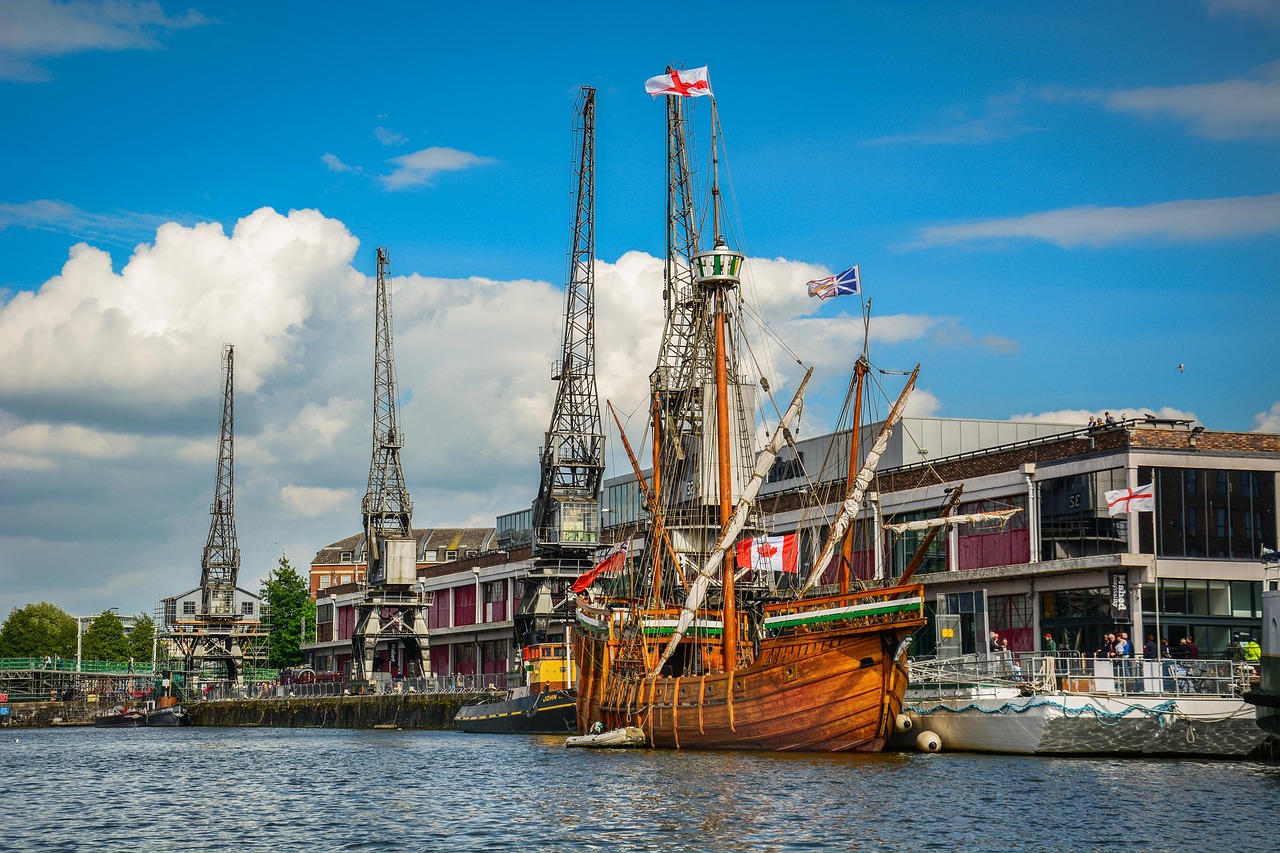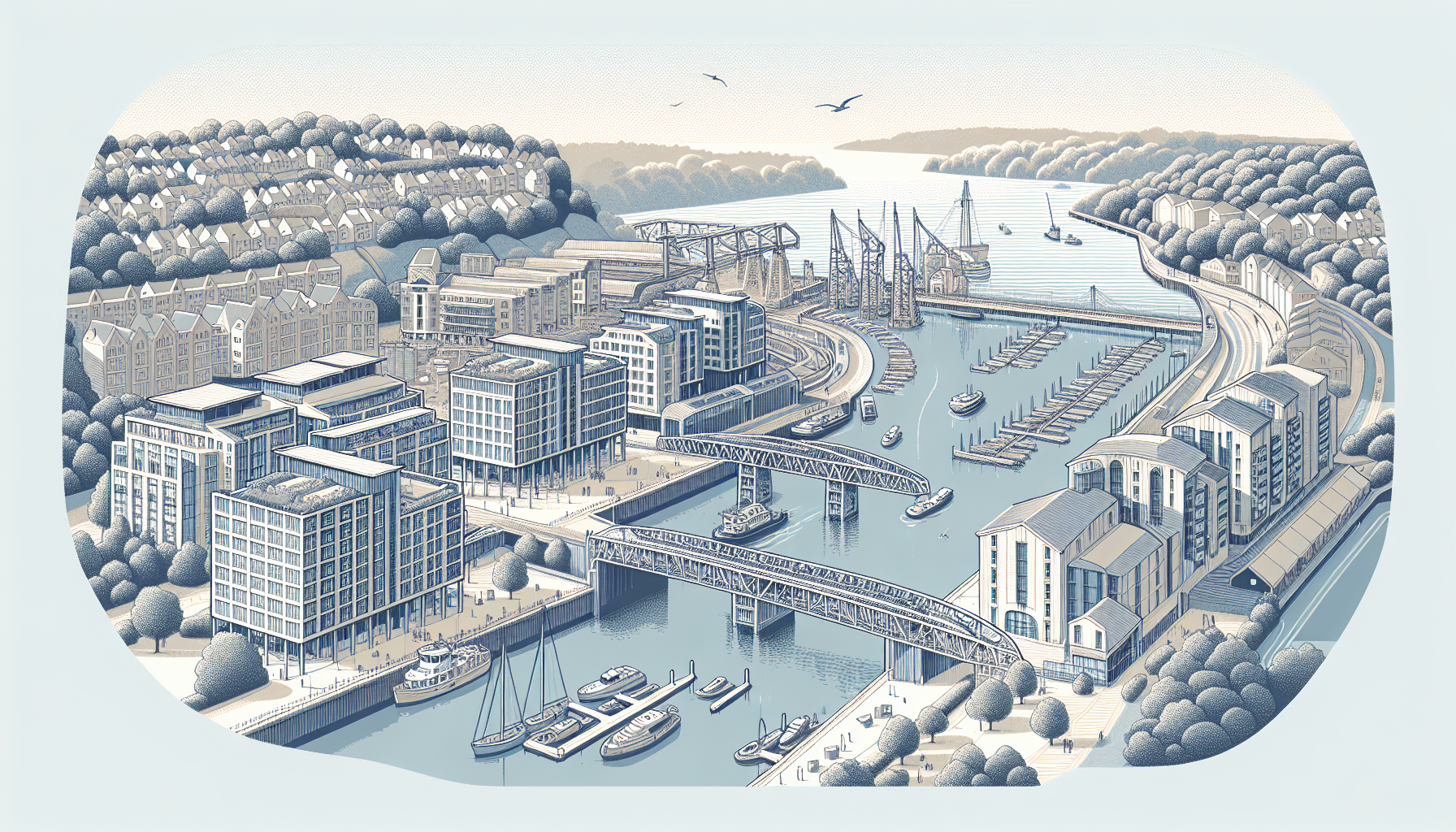
Bristol’s Floating Harbour is one of those feats of engineering that feels almost too clever for its time. It’s not just a story of docks and water levels. It’s Bristol’s past, present, and future all bound up in one stretch of water. I remember walking along the quayside on a drizzly October morning, cup of coffee in hand, half-awake but wide-eyed at how seamlessly heritage and innovation danced together on that old, still water. People were cycling past to work, boats bobbed gently at their moorings, and warehouses built two centuries ago now hummed with cafes, artists, and startups. That’s the magic of it. The harbour isn’t just old. It stays relevant.
The Birth of an Engineering Marvel
Let’s rewind to the early 1800s. Bristol was a booming port, but its location at the junction of the River Avon and the River Frome meant ships had to navigate treacherous tides that made loading and unloading a constant headache. Boats would get stuck in the mud at low tide, losing time and breaking hulls. It was a mess.
So, enter William Jessop. In 1809, he completed Bristol’s Floating Harbour, a complex system of locks and sluices that turned a tidal river into a non-tidal harbour. Essentially, Jessop isolated a chunk of the Avon, controlled its water level, and made it “float”. Hence the name. It was beautifully simple and brilliantly effective.
Jessop’s system allowed vessels to remain level no matter the tide outside. Something about that kind of foresight and meticulous engineering earns my deep respect. And back then, without digital models or AI simulations? The man was a genius working with slide rules and instinct.
Economic Backbone Then and Now
For well over a hundred years, the Floating Harbour was the engine room of Bristol’s economy. Ships brought sugar, tobacco, cotton. You name it. From across the world. Everything passed through this gateway. The docks were alive with stevedores, cranes, barking foremen, and the clatter of cargo.
But as modern container ships outgrew the harbour and moved operations to Avonmouth, critics assumed the Floating Harbour would become yesterday’s news. It didn’t. Bristol reinvented it.
Instead of rusting into silence, the old wharves transformed. Fermentation tanks gave way to film festivals. Industrial units cleverly turned into community hubs, tech companies, and flats with million-pound views. The SS Great Britain, once a rusting hulk, now draws global visitors thanks to years of loving restoration. It’s walking proof that heritage and commercial rebirth can play on the same team.
Today, tourism, property development, and the creative industries thrive along the water. When I met with a startup founder based in one of the converted dockside offices last year, he told me, “The harbour sells itself. It’s got vibe, history, and you can kayak to meetings if you want.” That kind of flexibility? Priceless.
A Delicate Dance with the Environment
Of course, preserving the harbour isn’t just about the aesthetics or the local economy. It’s tied deeply to environmental challenges too.
Maintaining water quality and navigating flood risk in a city shaped by rivers isn’t easy. The Floating Harbour sits at sea level, and with climate change causing storm surges and unpredictable rainfall, managing that risk is a constant puzzle.
Bristol City Council, working with engineers from firms like AtkinsRéalis and the Environment Agency, is developing adaptive flood strategies: think tidal barriers, smart sluice gates, and water-sensitive urban design. The Harbour’s infrastructure is being upgraded quietly but continuously to withstand 21st-century weather. And that’s a big job.
Interestingly, the cleaner water has led to a resurgence of wildlife. Swans, herons, and even the occasional otter make appearances now. I’ve definitely paused on my walks to take far too many pictures of a sleepy seal lounging on a pontoon like royalty. That slow comeback of nature? That’s a quiet win.
Education Through Experience
What strikes me is how the harbour has become a living classroom. From UWE engineering students studying historical hydrodynamics, to primary school groups taking boat tours to learn about sustainability, the space blends learning with firsthand experience.
It’s not about preserving a frozen relic. The point is evolution. Keeping things dynamic. Letting the past inform the present, without becoming trapped by it.
Holding It All Together
Let’s be honest. Not every city gets a second chance with spaces like this. Bristol had the luck of timing, the right mix of civic pride, local talent, and not a little stubborn creativity. That’s why the Floating Harbour lives on. Not just as a piece of engineering ephemera, but as a heartbeat.
It’s tempting to flatten the story into a neat headline like “Old Port Makes Good” but that misses the nuance. The harbour is messy. It needs care, funds, attention. It demands ongoing maintenance and brave decisions. But it’s also soulful. Catch it just after sunset, with the masts reflecting in the still water and kids skimming stones beside couples heading to dinner, and you’ll see it: beauty, built and rebuilt over time.
Frequently Asked Questions
Is the Floating Harbour still used for commercial shipping?
Not in the traditional sense. While large cargo has shifted to ports like Avonmouth, the harbour now supports leisure boating, tour boats, and occasional specialist deliveries. It’s more diverse in purpose but no less active.
How is the harbour maintained today?
Bristol City Council manages the harbour’s lock gates, sluices, and water levels. They collaborate with the Environment Agency on flood prevention and ecological monitoring. Maintenance is ongoing and includes both manual inspections and digital monitoring.
What environmental challenges does the Floating Harbour face?
The main issues are flood risk due to sea level rise and stormwater runoff affecting water quality. Projects like the Bristol Avon Flood Strategy are addressing these through tidal defenses and sustainable urban drainage systems.
Can you swim in the Floating Harbour?
Technically, it’s not a designated swimming area and the council advises against casual swimming due to currents, boat traffic, and water quality concerns. However, controlled events like the annual SwimVenture do take place with safety measures.
How can visitors best experience the harbour?
Walking or cycling along the harbourside paths is a great start. You can also take guided boat tours, visit the M Shed museum, or explore the SS Great Britain. The harbour is easily accessible and packed with food, art, and history. Whatever your pace.
Feeling inspired? Next time you’re in Bristol, take the long way round via the quay. Walk a little slower, listen to the water, and let the layers of history. And hope. Sink in.