When we talk about civil rights movements in Britain, the spotlight often falls on names and moments from across the Atlantic. But right here at home, in a bustling corner of Bristol back in 1963, something powerful unfolded that didn’t just challenge racial inequality . It cracked its very foundation.
The Bristol Bus Boycott isn’t just a footnote in Black British history. It’s a defining chapter. One that should be shouted louder, taught wider, and respected deeper.
Setting the Stage: Britain in the Early 1960s
Let’s not kid ourselves . The Britain of the early ’60s wasn’t the inclusive society many of us hope for today. While the decades after World War II saw a dramatic increase in immigration from Caribbean countries, especially under the British Nationality Act 1948, acceptance didn’t arrive with open arms.
Discrimination, though often veiled in politeness, was rampant. From housing to jobs, opportunities were routinely denied. And in Bristol, a glaring example was playing out every single day across the city’s bus routes.
For years, the Bristol Omnibus Company held an unofficial policy: no Black or Asian bus drivers or conductors. The color bar was real . Institutional, tangible, ugly.
Meet the Change-Makers
Young, sharp, and tired of being excluded, Paul Stephenson. An articulate and fearless youth worker. Wasn’t about to let the injustice go unchecked. A former RAF serviceman and the first Black social worker in Bristol, Stephenson knew both resilience and strategy. Backed by community groups and local activists, including Roy Hackett, Guy Bailey, Owen Henry, and Audley Evans, he stepped up.
Now, here’s the bit that really hits hard. Guy Bailey, a well-qualified young man, applied for a job at the bus company. At first, he was told to come in for an interview. But once they realized he was Black, that offer was snatched away. No excuses. Just blatant refusal.
Paul and Guy decided: enough’s enough.
The Boycott Begins
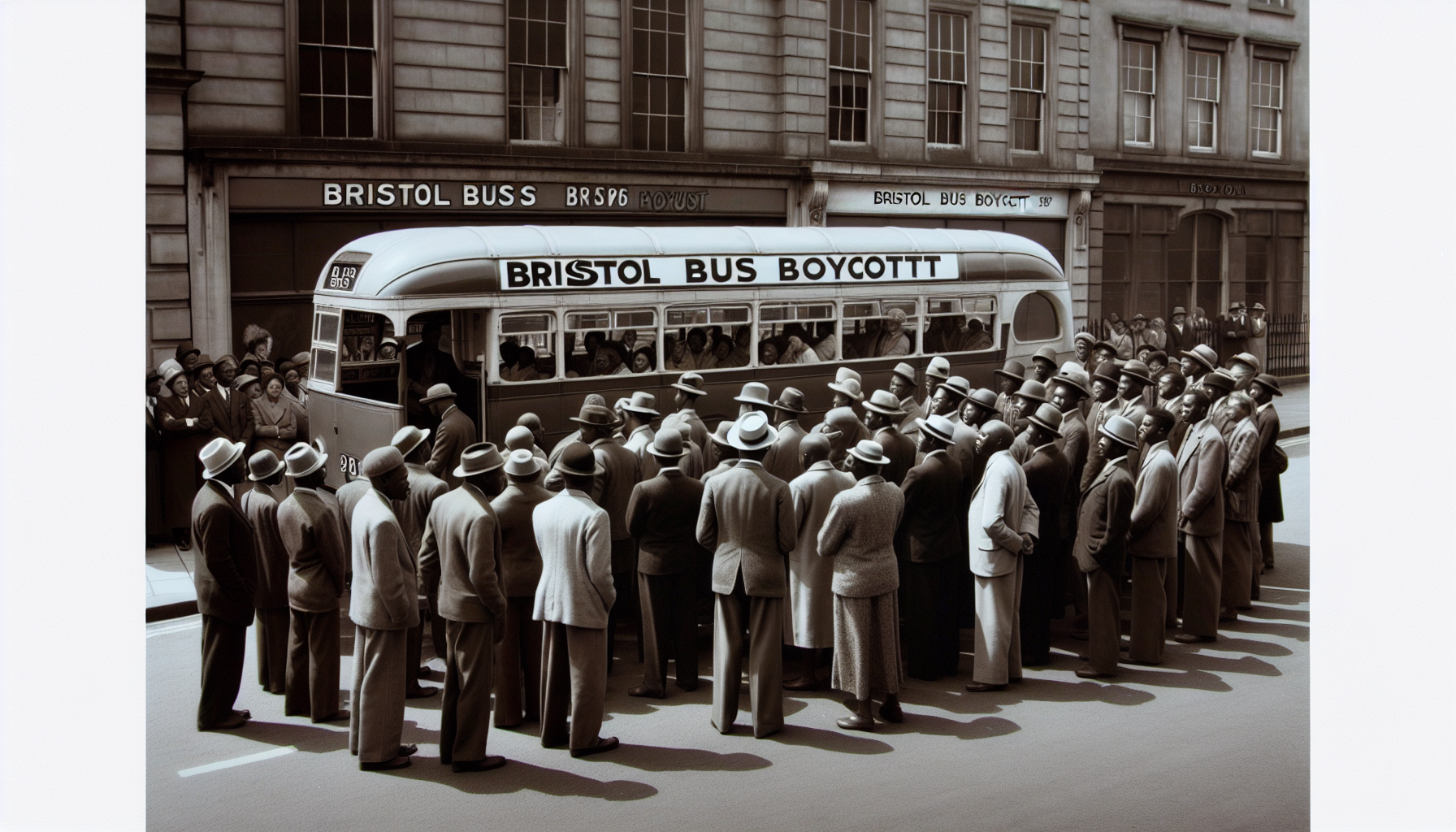
On April 29, 1963, the Bristol Bus Boycott started.
The premise was simple but fierce: no support for a bus system that discriminates. Day after day, people avoided the buses. Word spread fast . Not just across Bristol but throughout the country. The strike gained momentum despite criticism, with support pouring in from unexpected places.
Tony Benn, MP at the time, spoke out. So did Labour leader Harold Wilson and even famous comedian Tommy Trinder. Solidarity came from white Bristolians too . Many students and workers joined arms with the Black community, marching, protesting, and demanding change.
It wasn’t easy. Protesters faced insults. Some lost jobs. But they stood tall.
“It wasn’t just about getting a job. It was about being seen. Being valued,”
– Roy Hackett (2009 interview with BBC)
Victory, At Last
On August 28, 1963 . A date that, perhaps poetically, mirrors Martin Luther King Jr.’s iconic “I Have A Dream” speech in Washington . The Bristol Omnibus Company finally relented. They scrapped the racist policy and agreed to employ Black and Asian staff in all capacities.
Shortly after, the first non-white bus conductor was hired . A quiet but radical moment of justice.
It wasn’t a complete fix. One policy change wasn’t going to erase years of exclusion. But it was a crack in the wall. A beginning.
And think about this: just two years later, Britain passed its first Race Relations Act in 1965, outlawing discrimination in public places. You can draw a bold line from Bristol to Westminster on that timeline.
Why This Story Still Matters
Today, we live in a country shaped by diversity, yet systemic racism hasn’t vanished. It’s just evolved. Whether it’s underrepresentation in corporate leadership, disparities in health care, or the continued racism in policing and schools. It’s still there.
The resilience shown by those involved in the Bristol Bus Boycott should be a source of inspiration. We’re not just looking back to pat ourselves on the back. We’re looking back to remind ourselves what’s still unfinished.
I first came across the story in a dusty library copy of Black British History: New Perspectives. I remember highlighting whole pages in shock. Not just because of the courage it took. But because I hadn’t been taught any of it in school. Why was this powerful protest missing from the textbooks?
When I met Roy Hackett in 2017 during a community heritage event in St. Pauls, he had one key message: “Never let history be forgotten. Change depends on memory.”
He wasn’t wrong.
The Legacy Lives On
The fight for equality didn’t end at the bus depot. Paul Stephenson went on to play a major role in the civil rights movement in the UK. He worked on campaigns to push forward more inclusive policies nationwide. His advocacy contributed to the foundations of organisations like the Commission for Racial Equality.
Later in life, Stephenson was awarded an OBE. And rightly so. But for many involved in the boycott, the real reward was seeing younger generations walk through doors that had previously been slammed shut.
So, what’s next?
Well, here’s the thing: the Bristol Bus Boycott shows us how grassroots activism can rattle the status quo. It proves that injustice, when named and challenged, can be dismantled. One persistent voice at a time.
Black British history is British history. It’s long past time we normalize that truth.
Speak its names. Tell its stories.
Because silence? That’s never where change starts.
Frequently Asked Questions
Why was the Bristol Bus Boycott significant?
The boycott challenged a local but deeply entrenched practice of racial discrimination and set a national precedent. It’s widely credited with influencing legislation like the 1965 Race Relations Act . Signalling a crucial shift in how the UK addressed institutional racism.
Who were the key figures involved?
Paul Stephenson led the campaign, with support from Roy Hackett, Guy Bailey, Owen Henry, Audley Evans, and the West Indian Development Council. Each played a vital role in organizing, communicating, and sustaining the boycott.
Was the boycott successful?
Yes. After four months of sustained pressure and national attention, the Bristol Omnibus Company dropped its discriminatory policy and hired its first non-white bus conductor. It was a victory for civil rights in the UK.
How did this event impact future anti-racism laws in Britain?
The boycott added political urgency to the need for race equality laws. It contributed to the public and political momentum that led to the UK’s 1965 Race Relations Act. The first legislation making public racial discrimination unlawful.
Is this event taught in UK schools?
Not widely, although campaigns have pushed for better representation of Black British history in the national curriculum. Some schools include it in modern GCSE history or PSHE lessons, but coverage varies and is often limited.
Let’s keep the conversation going. Share this story, talk about it, question the gaps in our collective memory. Because if we don’t preserve stories like these, who will?