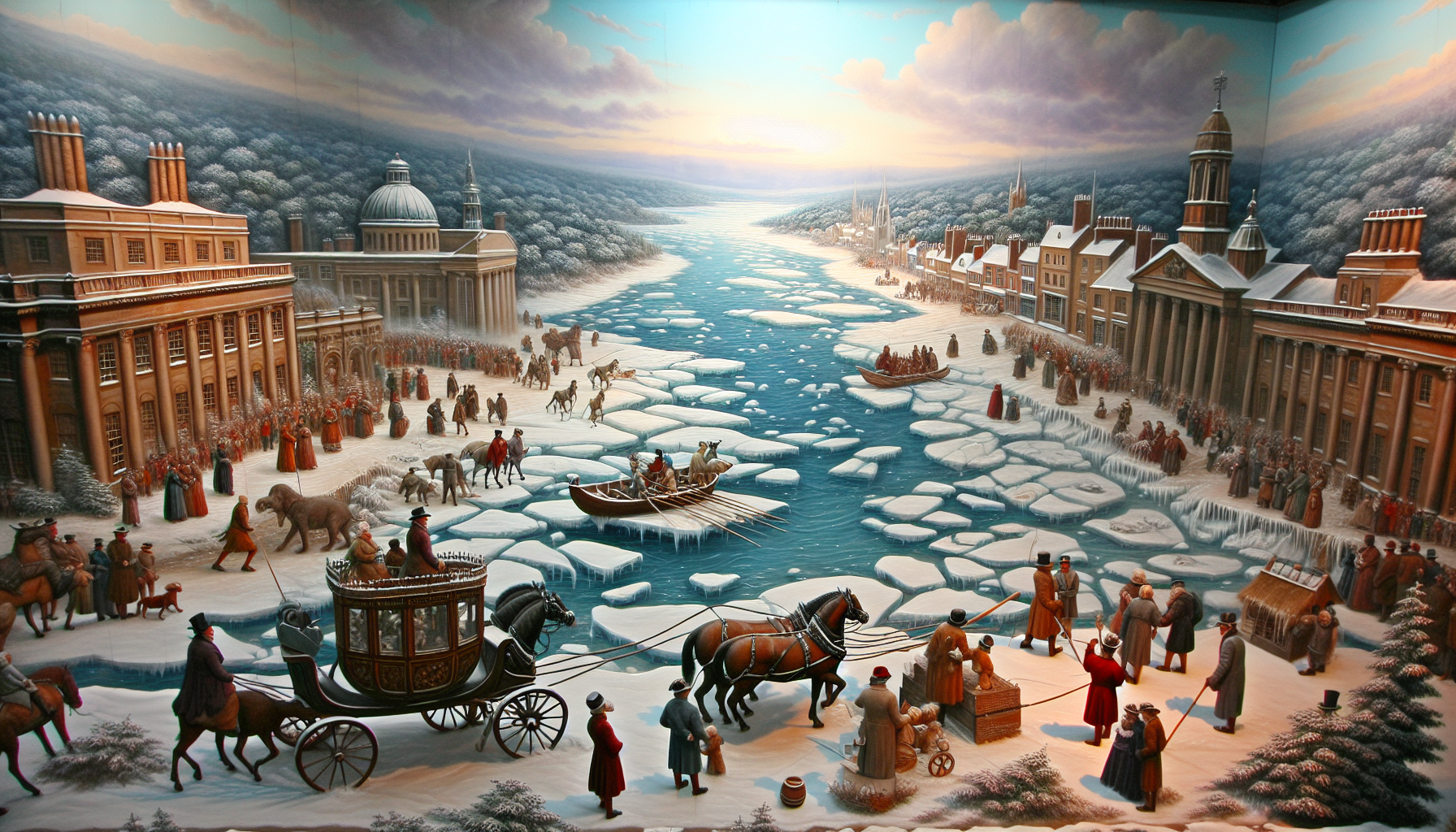
Thick ice stretched across the Avon, locking the river in a wintry embrace. The bitter chill wasn’t enough to stop the townspeople, though. If anything, it sparked something rare, something magical. A frost fair.
These events weren’t everyday occurrences; they were born from extreme, almost surreal winters when the rivers became solid enough to bear the weight of both people and their extravagant celebrations. While London’s Thames frost fairs are the most famous, the Avon had its own legendary moments when the cold transformed it into an icy playground.
A Winter Unlike Any Other
It’s hard to imagine a river like the Avon freezing completely solid. Today, changes in climate and urban development make it nearly impossible. But in centuries past, prolonged deep freezes turned water into ice thick enough to support markets, games, and even makeshift taverns.
Historical accounts paint vivid pictures of these unexpected winter festivals. Stalls set up along the ice sold everything from roasted meats to warming ales, creating a scene of community and resilience. The bitter cold may have taken its toll, but that didn’t stop people from finding joy amid the frost.
The Spectacle of Frost Fairs
Imagine walking onto a frozen river and finding it transformed into a bustling mini-town. Vendors called out their wares, children skated across the ice, and musicians played as if it were a midsummer festival rather than a bone-chilling winter’s day.
Local artisans took advantage of the unusual market conditions, carving intricate designs into wood or even printing special souvenirs to mark the occasion. Far from just a small gathering, these frost fairs became cultural phenomena, remembered long after the ice had melted.
A Dangerous Delight
Of course, not every moment was filled with laughter. Ice, no matter how thick, is never truly predictable. There were moments of danger. Cracks forming suddenly, people misjudging the strength beneath their feet, and even the occasional tragic plunge into the frigid water.
Those who dared to set up heavier stalls took great risks, some losing their goods (or worse) when the ice claimed them. Despite the joyous atmosphere, caution was always necessary.
Why Don’t We See These Fairs Today?
It’s tempting to wonder why such spectacular events no longer happen. Simply put, the world has changed. Winters are warmer, the Avon no longer freezes with the same intensity, and safety measures prevent large-scale gatherings on unpredictable ice.
Ice fairs now belong to history, immortalized through records, illustrations, and old tales passed down through generations. The world is different, but the spirit of those extraordinary winters still lingers in cold snaps and the occasional frozen riverbank.
The Legacy of the Great Frost Fair
Though frost fairs have faded into the past, their impact endures. They remind us of a time when adversity didn’t just bring hardship. It brought opportunity, innovation, and an undeniable sense of community.
Perhaps that’s the most remarkable thing. Not the ice itself, or even the spectacle, but the way people came together to make the most of an extraordinary circumstance. That’s a lesson that still holds true today.
Frequently Asked Questions
How thick did the ice have to be for a frost fair to take place?
The ice needed to be at least several inches thick. Thick enough to support not just individuals but market stalls, tents, and even animals. In particularly severe winters, ice could reach over a foot in depth.
When was the last significant frost fair held?
While smaller freezes have occurred, the last true frost fairs on major British rivers happened in the early 19th century. Since then, climate changes and river modifications have made such occurrences unlikely.
Were frost fairs unique to England?
No, similar events happened across Europe when rivers froze solid. The Seine in France, for example, saw its own version of winter markets in extreme cold spells.
How dangerous was attending a frost fair?
Though many enjoyed these gatherings without issue, there were always risks. If the ice weakened, stalls or people could fall through. Sudden thaws sometimes led to rapid breakages, making quick exits essential.
Could we ever see a frost fair again?
While it’s unlikely given current climate trends, a prolonged extreme winter could, in theory, create conditions suitable for another temporary freeze. However, modern safety regulations and environmental concerns would likely prevent fairs on the same scale as before.